
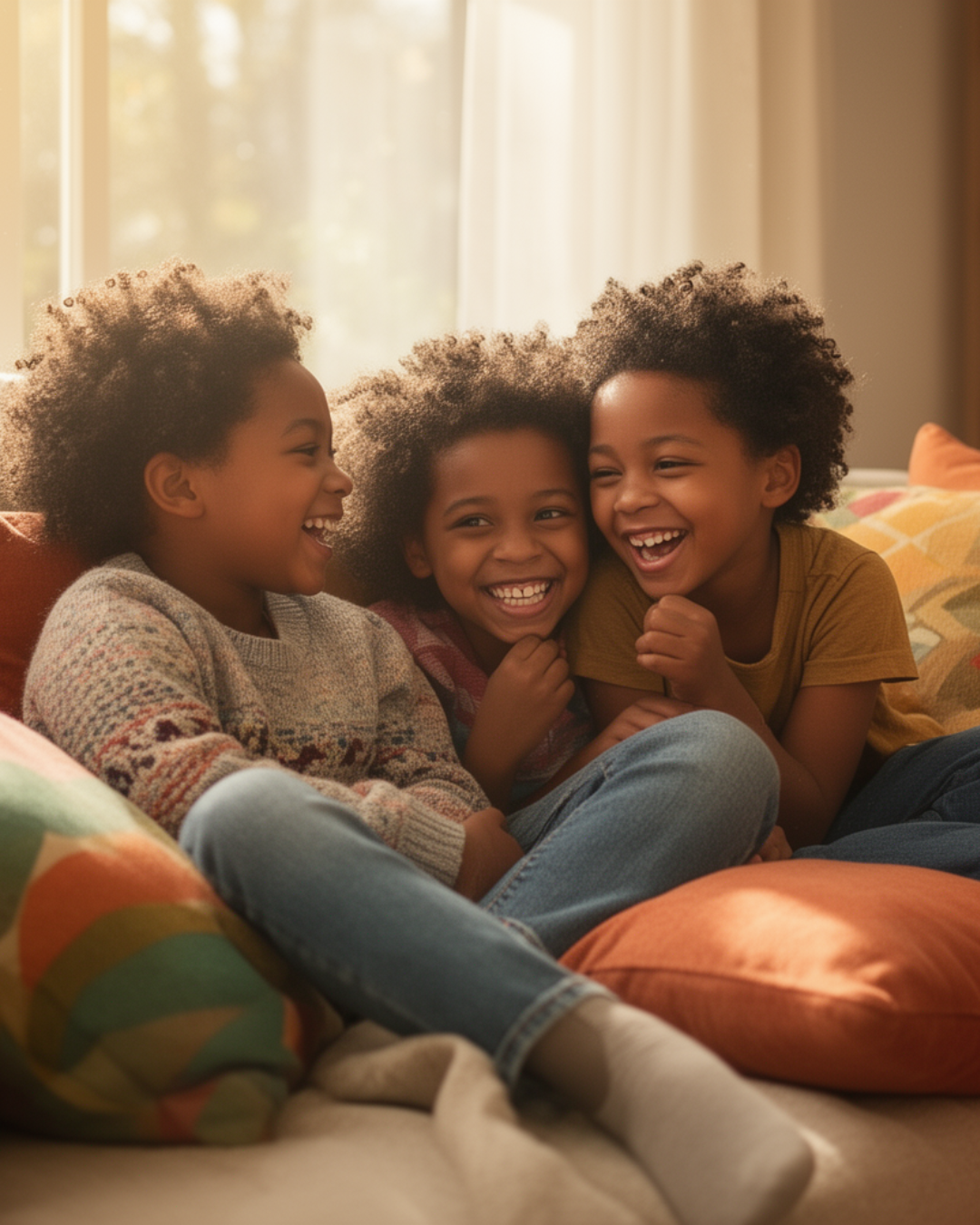
The first place learning ever takes place is in the home.
Before school, friendships, and before the world has a say.
Home is where we learn how to love, share space, communicate, and handle conflict. And within that space, sibling relationships quietly shape our understanding of family life and emotional connection.
As children, sibling love is often raw and genuine. Our siblings are usually the first people we form close relationships with outside of our parents. We play together, argue, compete, and reconcile. In many ways, sibling relationships become mirrors of who we later show up as in adulthood.
The Family Relationship We Often Overlook
We often talk about friendships, romantic relationships, and even professional connections. But sibling relationships—one of the most foundational parts of family life are rarely examined with the same care.
Maybe it’s because we assume they’ll always be there.
They grew up with us. They know us, so they understand us… right?
But shared history doesn’t automatically create emotional closeness. And without clear communication and boundaries within families, even the closest relationships can drift.
When Sibling Relationships Are Nurtured, They Become Lifelines
When handled with intention, sibling relationships can become one of the strongest emotional supports a person has.
Siblings are often our first supporters, rooting for us quietly, celebrating our wins, and standing with us through disappointments. They are the first shoulders we cry on and the voices that remind us that things will be okay.
This kind of bond doesn’t happen by chance. It grows in environments where emotional safety in the home is encouraged and modeled.
How Distance Creeps In—Even in Loving Families
Over time, many sibling relationships don’t weaken because love disappears, but because attention does.
Life gets busy.
Roles change.
Unspoken expectations build.
Without honest conversations and healthy boundaries, misunderstandings linger, and distance quietly settles in.
Any relationship that isn’t nurtured will struggle, and sibling relationships are no different.
A Reflection for Parents: The Role You Play Matters
As parents, we are shaping more than routines—we are shaping relationships.
Sibling bonds don’t automatically grow strong on their own. They are influenced by what children observe at home: how conflict is handled, how respect is shown, and how differences are managed.
Encouraging sibling relationships doesn’t mean forcing closeness. It means modeling respect, fairness, and boundaries in everyday family life.
Before schedules become overwhelming…
Before adulthood pulls siblings in different directions…
There is a window where these bonds are being formed—often quietly.
And the environment you create now can influence how your children show up for one another long after childhood.
A Reflection for Siblings: Taking This Relationship Seriously
If you’re reading this as a sibling, this matters for you too.
Sibling relationships require intention in adulthood. They don’t stay meaningful just because they once were.
Taking this relationship seriously may mean setting boundaries, having uncomfortable conversations, or choosing effort over distance.
You don’t have to agree on everything.
You don’t have to be inseparable.
But showing up with maturity and care can preserve a bond that holds shared history and deep understanding.
A Relationship Worth Investing In
Sibling relationships aren’t something we figure out once and move on from. They are relationships we practice through growth, change, and different life seasons.
With patience, grace, and intention.
Whether you are a parent laying the foundation or a sibling choosing to reconnect, the effort you make today matters.
Family relationships shape us long before we realize it and often long after we think they’ve stopped.
Invest in your sibling relationship; it’s often worth it.
—
Still learning. Still evolving.
evolvingwithcheta
4 thoughts on “Why Sibling Relationships Matter and Are Worth Encouraging”
Wooooowwww, this is a very beautiful and powerful piece.
You actually touched on every factor and addressed every concern systematically.
Well, prior knowledge about certain important issues gives us a win-win.
During our time as children, we just grew up with one another, enjoyed each other’s company and loved one another. But it wasn’t really an intentional journey of preparing ourselves for the storms of adulthood vis a viz responsibilities, focus, distance etc.
So I’m positive thst this would help present day parents to parent better, be more intentional in fostering a solid sibling’s relationship that could stand the storms of life.
It would help children to guard against falling apart from that bond of love.
It’s not late for us too as adults, to look inwards to make our relationships better with our siblings even at old age, as it’s never too late.
Show love, stay loved and remain strong and resilient in it.
Yes, every relationship needs intentionality especially with siblings. It’s so easy to assume siblings will grow to love themselves.
Without intentionality, it will be difficult.
Parents have a huge responsibility to foster a strong relationship amongst their children so they can continue the love in adulthood.
Thank you ma’am @Doris for lending your voice to this conversation and for your insightful comment.
Relationships require effort, but how we measure that effort depends on the value we attach to them. With value comes expectation, and with expectation comes the need for reciprocation.
Sibling relationships are different. You don’t choose your siblings; you are given to one another. They’ve known you through your formative years, the seasons of uncertainty, the shared memories, the pain, the growth. Yet even those bonds can fracture if they aren’t nurtured with intention. Familiarity alone isn’t enough; it must be supported by care and conscious investment.
Parents carry a heavy responsibility, but they can only give what they know. As siblings grow into adulthood, the responsibility shifts. Each person must decide the value they place on themselves and on the relationship and act in alignment with that value, with accountability and maturity.
Ultimately, we all have work to do. Money comes and goes. Careers rise and fall. But love, when intentionally nurtured endures it all.
Thank you so much @Henry for this insightful comment.
No truer than this: Parents carry a heavy responsibility, but they can only give what they know.
As siblings grow into adulthood, the responsibility shifts.
Each person must decide the value they place on themselves and on the relationship and act in alignment with that value, with accountability and maturity.
I appreciate this greatly, thank you 🙏.