
Have you ever wondered how to stay consistent with something you started with so much excitement, only to find yourself struggling a few weeks later?
Maybe it was a new habit, a personal goal, or something you’d been meaning to do for a long time. You made plans, got started, and felt good about finally doing something about it.
Then the excitement faded. You missed a day, put things off, and before you knew it, the thing you were once so eager to do had become another thing you kept postponing.
I’ve been thinking about why this happens, partly because I’ve experienced it myself.
The Comfort of Starting Again
I remember when I decided to start working out. I resumed at the gym and was consistent for a while. I was showing up, and I felt good about finally doing what I’d planned.
Then I missed a day.
I told myself I’d make up for it the next day, but I didn’t. I kept postponing it until I eventually decided to start the following week afresh.
The funny thing was that the idea of starting again felt good. I could picture myself back at the gym, getting into a routine and doing better this time.
But why did starting again feel so much easier than simply going back the next day?
Looking back, I think there’s something comforting about a fresh start. We get to imagine doing things properly this time, with renewed motivation and a clean slate. We don’t have to deal with the fact that we’ve already missed a day or fallen out of our routine.
But while we’re busy planning our fresh start, we’re still not doing the thing we wanted to do.
I wonder how often we do this in other areas of our lives. We miss a writing day and decide to start again on Monday. We abandon a book and promise to read more next month. We fall behind on a goal and wait for the perfect moment to pick it up again.
Of course, there are times when we genuinely need to pause or change our plans. But other times, we’re making starting over a condition for continuing.
What Happens When the Motivation Fades?
I’ve wondered how some people manage to stay committed to their goals long after the initial excitement wears off.
Is it discipline? Better routines? The ability to keep going even when they don’t feel motivated?
I’ve thought about these questions for a while, and I’m beginning to realise that consistency isn’t necessarily about getting everything right every time.
When we miss a day, it’s easy to feel as though we’ve ruined our progress. We might tell ourselves we’ve lost momentum, and because returning feels uncomfortable, we postpone it a little longer.
But missing one day doesn’t undo everything that came before it.
When I missed a gym session, I could have simply returned for my next session instead of waiting for a new week. I didn’t need a fresh plan or another burst of motivation. All I needed was to go back.
My experience made me realise that consistency isn’t about never missing a day. It’s also about what we do after we’ve missed one.
How to Stay Consistent When Motivation Fades
I don’t think there’s one answer that works for everyone, but there are a few things we can try when we notice ourselves slipping back into old habits.
1. Don’t wait for Monday to get back on track
Have you ever missed a few days of something and decided that Monday would be the perfect time to start again? Then Monday comes, and somehow, you still don’t get around to it.
I’ve done this with my gym routine. Instead of going back the next day, I kept pushing the date forward.
Sometimes, we make returning harder than it needs to be. If you’ve missed a workout, you can go back for your next session. If you’ve stopped reading your book, you can pick it up again today. You don’t have to wait for a new week or a new month.
The next time you fall behind, ask yourself: Can I simply pick up where I left off?
You may not always be able to continue exactly as you did before, but you can decide what makes sense now instead of automatically postponing everything.
2. Make the next step manageable
Sometimes, we fall behind because the goal starts to feel like too much. We think about everything we need to do to catch up, and it becomes easier to avoid the task altogether.
For instance, if you’ve missed a goal you set for yourself or failed to meet a deadline you’d planned for, you might feel you need to make up for all the time you’ve lost at once. But instead of worrying about everything you haven’t done, you could focus on what you can realistically do next.
It helps to set realistic targets and break them down into smaller, manageable steps. If you’ve been putting off a project, for example, you could start by working on one part of it instead of expecting yourself to finish everything at once.
You’re not giving up on the bigger goal. You’re finding a way to get moving again.
And if you keep struggling with your original plan, it might be worth asking whether it’s realistic for your current circumstances. Sometimes, we need to adjust the plan rather than keep blaming ourselves for not following it.
3. Find a way to keep yourself accountable
I’ve also been thinking about having an accountability partner — perhaps a friend, a spouse, or someone we trust who can check in on our progress.
Sometimes, knowing that someone will ask how we’re getting on can encourage us to follow through. You could tell a friend what you’re trying to work towards and ask them to check in with you at the end of the week.
If you’d rather keep your goals private, you could check in with yourself instead. At the end of each week, take a few minutes to consider what went well, what got in the way, and what you might do differently the following week.
The idea isn’t to make yourself feel guilty whenever you fall behind. It’s to pay attention to what’s happening and give yourself a better chance of following through.
Of course, other people can’t do the work for us. But having some support, or simply being honest with ourselves about our progress, can make it easier to keep going.
Pay Attention to Your Patterns
I suggest one place to start: pay attention to what happens when you fall behind. Do you try to pick up where you left off, or do you find yourself postponing things and waiting for another fresh start?
Taking a moment to recognise these patterns can help you understand what gets in the way of your consistency. Maybe your plan is too demanding, maybe you need some support, or maybe you’ve convinced yourself that you need to feel ready before you can continue.
Whatever the reason, you don’t have to be hard on yourself for falling behind. You can acknowledge what happened, make adjustments where necessary, and decide what to do next.
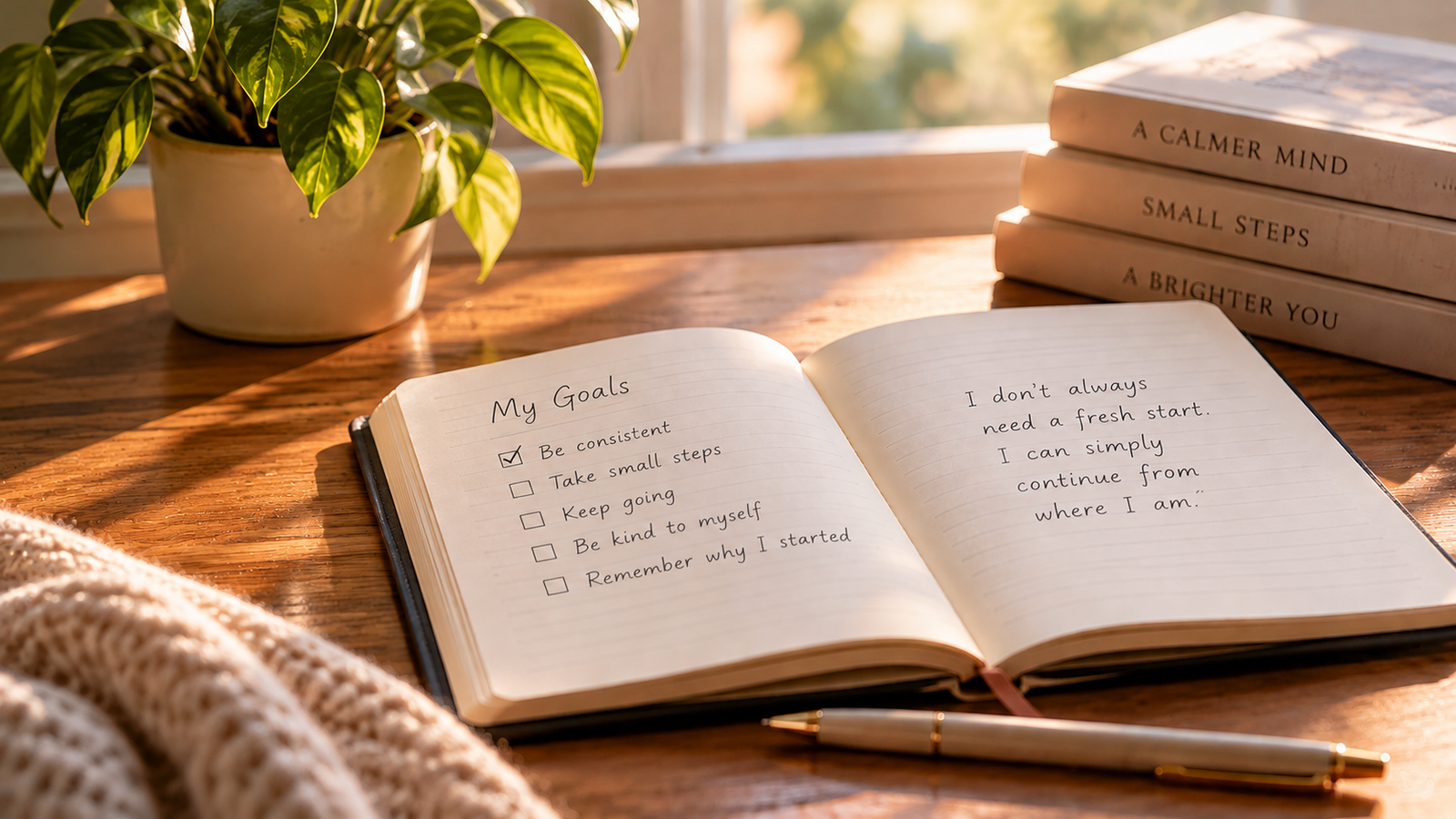
The next time you find yourself putting something off, consider whether you really need to start again or whether you can simply continue from where you are.
Sometimes, you don’t need a fresh start. You just need to take the next step.
What about you?
Is there something you’ve been putting off because you feel you’ve already fallen too far behind? What’s one small thing you could do to get moving again?
I’d love to hear your thoughts.
Evolving With Cheta — A space for becoming yourself.